

By Hannah St George
Trigger warning: this article mentions miscarriage, sexual violence and male violence against women and girls.
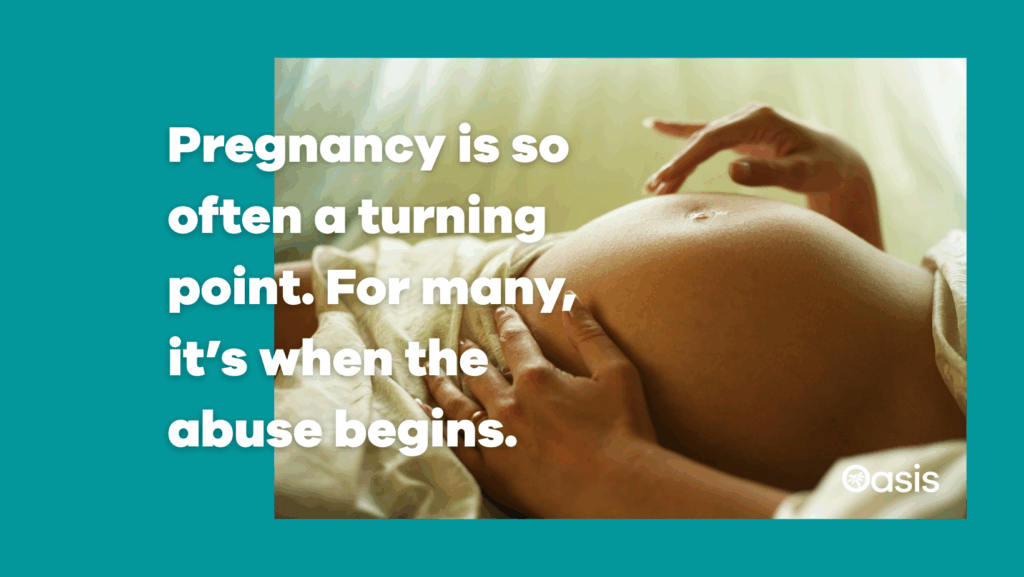
30% of all domestic abuse cases begin when survivors are pregnant – and risks can increase even further after birth.
At Oasis, we seek not just to understand why this happens, but also to act: supporting mothers, their children, and entire families to reduce harm and find healing, every day, not just on Pregnancy and Infant Loss Remembrance Day.
Why do so many first instances of domestic abuse occur whilst survivors are pregnant?
While anyone can be an abuser or survivor regardless of gender, abuse is overwhelmingly perpetrated by men against women and their children, most often within intimate relationships.
For some perpetrators, their partner’s pregnancy is seen as a loss of control, a challenge to their dominance or freedom. The baby becomes a new focus of the survivor’s time, energy, and love, which the abuser may resent or punish. This can trigger the start or escalation of violence.
In other cases, pregnancy itself can be the result of reproductive coercion, a form of sexual violence where perpetrators interfere with contraception or force a partner into pregnancy. It’s a tactic of control, intended to make survivors more dependent and less able to leave.
Women experiencing domestic abuse are significantly more likely to have unintended pregnancies, especially teenage girls and young women. Around 20% of pregnant women experience sexual violence, deepening the trauma and risk already present.
Perpetrators may believe pregnancy gives them more power or protection from consequence. Survivors may become physically or financially dependent – particularly during maternity leave or while caring for young children – creating new barriers to leaving.
Isolation also plays a major role. Abusers might restrict a partner’s contact with family and friends, make excuses to cancel plans, or misrepresent medical needs to cut them off from their network. And even when survivors do leave, abuse can continue through child contact, sometimes worsening into stalking, harassment, or post-separation homicide.
How domestic abuse impacts pregnancy
Physical harm to mothers:
Domestic abuse during pregnancy increases the risk of injuries, miscarriage, and infection. According to Women’s Aid, 40% of abused pregnant women report head and neck injuries, and many report blows to the stomach. Around one in four maternal deaths are linked to domestic abuse.
Physical harm to babies:
Abuse can cause injury or death to unborn babies and contribute to complications such as colic, low birth weight, and premature birth.
Emotional and mental health effects on survivors:
Pregnancy under abuse increases the likelihood of anxiety, depression, and complex PTSD.
Effects on babies’ development:
Exposure to extreme stress and cortisol in the womb can alter how a baby’s brain develops, affecting future emotional regulation and stress responses.
How domestic abuse impacts parenthood
“I worried every day – could I protect my child?”
“Would they take my child away?”
“What if my baby became just like him?”
For survivors, having a child with their abuser can bring deep emotional turmoil. They may worry about their child’s safety, fear losing their child to social services, or feel guilt and inadequacy as a parent.
Abusers often exploit these fears, undermining survivors’ confidence and reinforcing harmful gendered expectations of motherhood. Society’s focus on women as “responsible” for their children’s wellbeing can further compound this, fuelling victim-blaming and shifting accountability away from those who perpetrate harm.
Relational trauma between an abused parent and their child can disrupt early bonding and attachment, shaping how both experience safety, love, and trust.
How domestic abuse impacts children
The danger doesn’t end with birth — the risk of abuse remains high when the baby is a newborn to age two.
Growing up in a household with domestic abuse can have lifelong consequences for children. Exposure to abuse increases risks of:
- Mental health challenges: depression, anxiety, trauma responses, eating disorders, substance misuse, and behavioural difficulties.
- Physical health issues: heart disease, stroke, and certain cancers linked to chronic stress.
- Educational disruption: difficulty concentrating and retaining information, leading to school struggles.
- Relationship difficulties: challenges forming friendships or healthy attachments, and a higher likelihood of experiencing or perpetrating abuse in later relationships.
Getting support
If you are at immediate risk of harm, please contact emergency services by dialing 999.
If you are experiencing domestic abuse, please reach out to Oasis on our helpline: 0800 917 9948.
If you are pregnant and experiencing domestic abuse, you can also reach out to a:
- GP
- Midwife
- Obstetrician
- Health visitor
- Social worker
You are not alone, we are here for you.